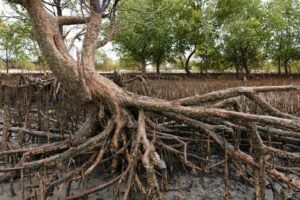
At Terra Madre Asia & Pacific, farmers, Indigenous leaders, food producers, and youth representatives from more than 20 countries across the Slow Food network called for urgent and concrete climate action. With the Philippines among the world’s most climate-vulnerable nations, and recently struck by violent typhoons, participants emphasized that as COP30 negotiations enter their final hours, community-led and nature-based solutions are essential to protecting lives, livelihoods, and ecosystems.
Climate Justice and Accountability
Delegates stressed that climate change is already a daily reality across the region, with destructive typhoons in the Philippines highlighting the human cost of inaction. They called for climate justice and accountability from major emitters whose greenhouse gas emissions disproportionately harm vulnerable communities. Participants urged policymakers to adopt strategies that prioritize ecological integrity, food security, and social well-being over profit. As the IPCC warns, climate-related shocks are projected to reduce global crop yields by 20–30% by 2050.
Nature-Based Solutions and Agroecology
Examples from Negros Island in the Philippines showcased the effectiveness of community-led, nature-based approaches, including mangrove restoration to reduce coastal flooding. Delegates highlighted the importance of conserving local seeds, revitalizing Indigenous knowledge, and maintaining community seed banks. Slow Food representatives reaffirmed that farmer-led agroecology, rooted in diversity, traditional wisdom, and collective organization, remains one of the most resilient pathways in the face of accelerating climate disruptions.
Agroecology and Community Resilience in Bangladesh
Bangladesh is experiencing increasingly severe climate shocks, from unexpected floods to prolonged droughts, which destroy crops and undermine food security. In response, communities are turning to agroecological methods that restore soil health, strengthen resilience, and reduce dependence on external inputs. These efforts are grounded in collaboration: farmers work alongside local communities to share practices, adopt climate-adaptive methods, and rebuild food systems capable of withstanding future challenges.
In the fertile heartlands of Bangladesh, Mohammad Hafizuddin, Indigenous representative of the Ramnagar Slow Food community, is reviving family-based farming rooted in Indigenous traditions. “Each year we invite families to return to the land, providing seeds, training, and a strong sense of community. This model blends local knowledge with collective action, inspiring both men and women to engage in sustainable agriculture. By reconnecting generations of farmers and reintroducing forgotten crops, we therefore strengthen food sovereignty and restore self-sufficiency and cultural pride”.
Protecting Forests and Food Culture in Indonesia
Imanul Huda of the Slow Food Community in Kapuas Hulu (West Kalimantan, Indonesia) shared how Dayak and Malay communities are enhancing resilience through sustainable agriculture, local food systems, and long-term forest stewardship. “In Kapuas Hulu, forests are inseparable from food security and cultural identity. Defending them from deforestation safeguards the biodiversity that sustains present and future generations”, he comments.
Climate Extremes for Coffee Growers
Across the region, coffee producers recounted the impacts of increasingly erratic weather.
In Thailand, forest-based coffee grower Lee Ayu, an Indigenous Akha producer from the Mejantai Sustainable Coffee Community and part of the Slow Food Coffee Coalition, explained that drought, rising temperatures, and new pest pressures are weakening crops. Sudden “rain bombs,” landslides, and unexpected frosts further threaten harvests.
“Agroecological diversification, integrating vegetables, fruit trees, forest species, and beekeeping, has emerged as a critical resilience strategy. Farmers shifting away from monocultures toward diversified agroforestry not only stabilize slopes and protect soils but also restore ecosystem services and diversify incomes. These practices help us and all the Indigenous communities maintain their connection to land, even where land rights remain insecure”, he explains.
Indigenous Entrepreneurs Restoring Benguet’s Forests
In Benguet (Philippines), young Indigenous entrepreneurs Daniel Jason Maches and Jaymar Garcia, founders of Banolmi Store PH and members of the Slow Food Coffee Coalition, described how unpredictable rains, typhoons, and droughts are disrupting coffee production. “In response, we are restoring native forests to shade crops, reduce landslide risks, and revive biodiversity. Through agroecology, we manage to revitalize heirloom rice and native seeds and build a community seed bank to safeguard future harvests”. Their work shows how Indigenous-led enterprises can restore ecosystems while strengthening culture and local economies.
Women Leading Climate Adaptation in India
Namrata Bali, director of SEWA Academy in India, highlighted the leadership of rural women in climate adaptation. “As monsoons become increasingly unpredictable, we have created community-based crop insurance schemes and seed banks that enable small-scale women farmers to recover quickly from climate-related setbacks, reinforcing local resilience and food sovereignty”.
Slow Food’s Message: Climate Solutions start within communities
Throughout Terra Madre Asia & Pacific, the Slow Food network emphasized that lasting climate solutions grow from the ground up, rooted in biodiversity, Indigenous knowledge, and strong local food systems that place communities, rather than corporations, at the center.
The voices gathered at the event demonstrated that effective solutions already exist: solutions capable of restoring ecosystems, revitalizing cultures, and securing a livable future for all. This is the heart of agroecology, both an adaptation strategy that strengthens resilience today and a mitigation pathway that reduces emissions and regenerates the ecosystems we depend on.
About Terra Madre Asia & Pacific
Part of the global Slow Food movement, Terra Madre Asia & Pacific is a space where communities, ingredients, and ideas converge to shape the future of food. In Bacolod, it unites more than 2000 delegates from across the region to exchange knowledge and strengthen networks for a fairer, more resilient food system. TMAP 2025 is made possible through collaboration between Slow Food, the City Government of Bacolod led by Mayor Greg Gasataya, the Provincial Government of Negros Occidental led by Governor Eugenio Lacson, the Department of Tourism led by Secretary Christina Garcia Frasco, the Department of Agriculture led by Secretary Francisco Tiu Laurel Jr., the Department of Trade and Industry led by Secretary Cristina Roque, TESDA Director General Kiko Benitez, Congressman Albee Benitez, Congressman Javi Benitez, and Senator Loren Legarda. Partners include the International Fund for Agricultural Development (IFAD), Meatless Monday, Plus63 Design Co., FEATR, and the Slow Food Community in Negros.
The event also introduces a distinct visual identity inspired by archipelagic landscapes and handcrafted clay forms, reflecting resilience, biodiversity, and cultural interconnectedness designed and created by illustrator Dan Matutina.
INDEPENDENT NEWS IS IMPORTANT.
PLEASE GIVE WHAT YOU CAN: PayPal.Me/clevergreensolutions
Enjoy reading Eco Voice? Please help us by purchasing a GIFT Voucher or send one to a friend and encourage people to purchase trees or seeds via The Native Shop – www.nativeshop.com.au

Plants, seeds & more delivered to your door!