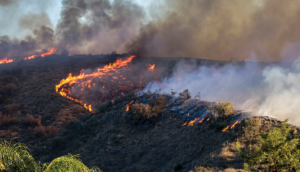
Australia has just recorded its third warmest winter this year, and the hottest ever for New South Wales, Victoria, and Tasmania. Extreme heat is arriving early, fire warnings are already live, and a record-breaking El Niño is officially underway.
But the climate story isn’t simply things are getting “hotter and drier.” Following widespread rainfall earlier this year, the Bureau of Meteorology has warned we could be on track to experience Australia’s wettest El Niño year on record.
For businesses and commercial property managers, the threat has fundamentally shifted. The real danger this summer is volatility – rapid swings between extreme heat, flash flooding, and unseasonal bushfires, often occurring in close proximity. Bushfire risk, in particular, is losing its traditional seasonal boundaries and becoming a persistent, year?round operational threat.
As climate risk moves from a long?term environmental issue to an immediate business continuity challenge, commercial property insurer FM offers its advice and guidance as it believes the majority of property loss is preventable.
Backed by decades of science?based research and full?scale testing, FM applies an engineer?led approach to risk, demonstrating that resilience can be built through targeted, hazard?specific mitigation.
Michael Hunneyball, FM’s Operations Chief Engineer, says:
“Climate volatility is now the defining challenge for commercial property. We’re seeing extremes at both ends of the spectrum – severe heat, drought, and bushfire conditions alongside sudden, intense rainfall and flooding. Businesses need to plan for uncertainty, not just seasons. With an engineering?led, data?driven approach, organisations can strengthen their sites against multiple hazards and significantly reduce the likelihood of property loss.”
To help businesses navigate this uncertainty, FM recommends the following tips for businesses, insurance managers, brokers, and commercial property managers this summer:
- Plan for volatility – Traditional seasonal assumptions no longer hold. Conduct multi?hazard risk assessments that consider concurrent threats, for example fire and flood. Prioritise current site vulnerabilities over historical weather patterns.
- Strengthen defensible space and structural resilience – For bushfire exposure: maintain defensible space, clear vegetation, and use FM Approved non?combustible materials for roofs, walls, and windows. For extreme rainfall ensure roof, floor, and yard drains are fully operational and regularly maintained to prevent water accumulation.
- Test and update Emergency Response Plans – A documented plan isn’t enough. Run drills, verify early?warning systems, and ensure staff understand shutdown procedures, equipment relocation protocols, and safe evacuation routes.
- Prioritise engineering solutions over temporary fixes – Replace reactive measures with permanent safeguards: upgraded drainage systems, non?combustible building materials, physical flood barriers, and hazard?specific protection designed to withstand decades of climate volatility.


INDEPENDENT NEWS IS IMPORTANT.
Enjoy reading Eco Voice? Please help us by purchasing a GIFT Voucher or send one to a friend and encourage people to purchase trees or seeds via The Native Shop – www.nativeshop.com.au

Plants, seeds & more delivered to your door!