With hybrid work practices now embedded in Australian working life, a workplace technology expert is urging businesses to scrutinise one of the most valuable spaces in the office – the meeting room.
The latest Australian Bureau of Statistics data on working arrangements shows that 36% of employed Australians usually worked from home in August 2025, almost unchanged from the previous year. According to Joseph Touma, Category Manager for Team Workspace at Logitech for Business ANZ, these settled working habits are changing how meeting spaces are used, as smaller on-site headcounts create an in-person room allocation problem for Aussie offices.
Touma highlights how older office layouts and the shift towards video conferencing are leaving larger meeting rooms underutilised, as smaller groups occupy larger spaces than they actually need. With businesses asking harder questions about ROI on workplace tech, he argues that in-person attendance data holds the key to room allocation and freeing up space so larger in-office teams can more easily take important meetings.
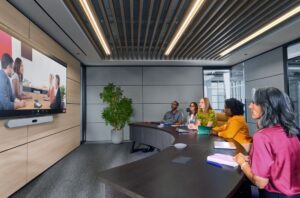
“Hybrid working has had a profound impact on all aspects of the working day, and this can be clearly seen in the meeting room,” he explains. “Where once a meeting would’ve been 12 people sat around a boardroom table, now it’s a split between people attending in-person and others dialling in.
“Think of it like a restaurant – you wouldn’t sit a couple at a table for twelve and shoo away a larger party arriving at the same time. Those empty chairs signify how offices haven’t caught up with how Australians are now working, and can cause friction when bigger groups in the office are locked out of larger rooms for important meetings.”
Touma suggests that to avoid this situation, businesses need to know how meeting rooms are actually used. In his view, this involves tracking key metrics including how many people use the space in person, on which days they sit empty or are booked by smaller groups, and the peak times when they are in demand. He suggests that this occupancy data, gathered by sensors and other hardware, would give IT and facilities teams the evidence they need to streamline room allocation.
“For IT and facilities teams, ROI comes from turning guesswork into evidence,” he concludes. “Hybrid working arrangements are clearly here to stay, and Australian businesses are continuing to adapt to improve productivity and reduce day-to-day points of friction. How to use meeting rooms is a new front line in these efforts, including matching these spaces to meeting size and the number of in-person attendees.
“Technology that can detect and record when and how rooms are occupied, such as in our new Rally Bar 2 and Tap Scheduler 2, allows key stakeholders to make more informed decisions about the space they have available. Businesses are always under pressure to get the most out of their existing resources, and the floorplan is absolutely a part of that.”
Logitech’s Rally Bar 2 and Tap Scheduler 2 are available in Australia now. For more information on Logitech’s Rally Bar 2, click here. To find out more about Tap Scheduler 2, click here.


INDEPENDENT NEWS IS IMPORTANT.
Enjoy reading Eco Voice? Please help us by purchasing a GIFT Voucher or send one to a friend and encourage people to purchase trees or seeds via The Native Shop – www.nativeshop.com.au

Plants, seeds & more delivered to your door!